handwritingprintablesfine motorpreschool
Printable Handwriting Activities: Everything You Need to Know
A calm guide to printable handwriting activities, with a short-session table, setup tips, and official reminder to treat development as a range, not a race.
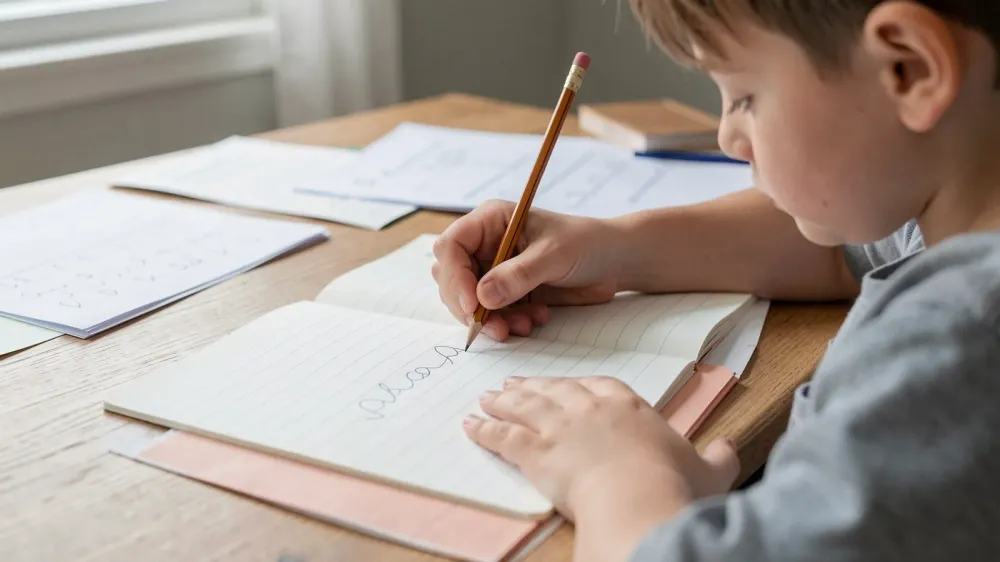
Short, clear, and finished before anyone is tired
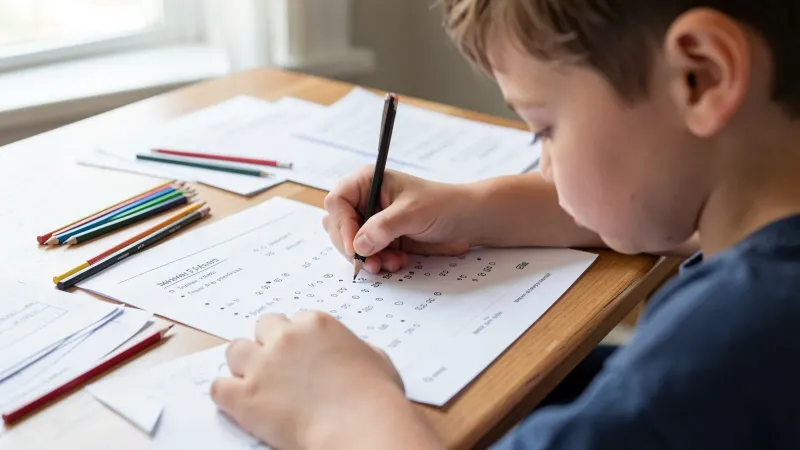
Printable handwriting activities help when they offer a good model, a little practice, and a way to stop. They hinder when they turn into a pile of traceable letters a child is told to “just finish” after a long school day. The point is a comfortable hand, a few letters or words made with care, and a child who will come back tomorrow.
There is no official worksheet that proves a child is ready or behind. The CDC’s developmental milestone pages are a better official backdrop than a social-media checklist: children vary, and a single skill should not be used as a verdict. If you are worried about pencil grip, pain, avoidance, reversals that are not easing, or a sudden change in a child’s writing, talk with the teacher and the child’s health care provider. A new printable is not an assessment, and this guide is not therapy advice.
If the school already uses a handwriting style, copy that style at home. Mixing several letter shapes in one week is a gift to nobody.
What to print, and what to skip for now
| Goal of the sitting | A page that usually helps | How to sit with it | Save it for later if |
|---|---|---|---|
| Getting used to a pencil | Large, simple paths, or a very short tracing of a familiar shape | A short pencil, a stable page, a relaxed grip reminder if needed, then play | The child is already tired, or the path is tiny |
| Learning a few letters | Two or three letters, with a clear starting point and arrows, and space to try them freely | You write one, they write one; talk through the first stroke | The page has the whole alphabet in one sitting |
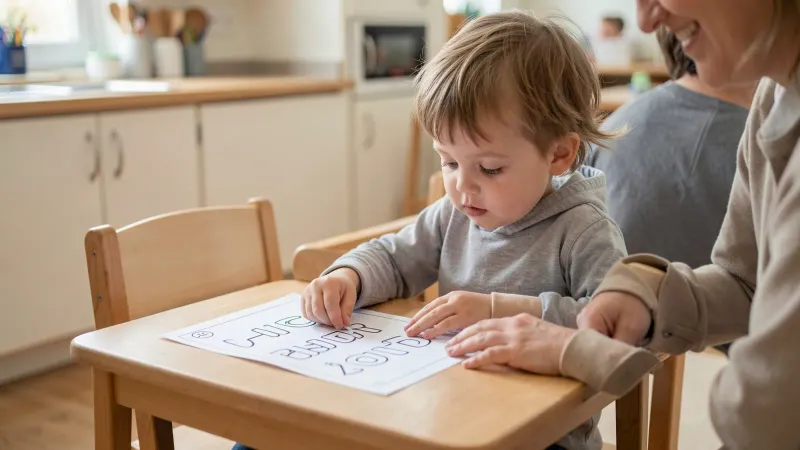
| Writing a name | A model of the name, in the school’s style, with plenty of space | Practice the name they actually need, not a decorative version | You have turned the name into a twenty-line drill |
| Moving from tracing to writing | A line of tracing and a line of copy, then a blank line | Let the last line be less perfect | The page never lets the child write without a grey letter underneath |
| Words or a short sentence | A single familiar word, then a short sentence if that is already easy | Say the word, look at the model, write, then stop | The sentence is a lecture in cursive the child has not been taught |
| Cursive or a new style | Only if school has started it, and only a few letters | Follow the school’s models | You are adding cursive “for an advantage” on top of a style they are still learning |
Paper with a simple baseline, or a clear midline if the school uses one, is easier than a heavily decorated page. If the lines are faint after printing, darken one sample line or reprint. “Fit to page” can shrink the letters until the model is no longer useful.
A calm setup, step by step
Have the child sit so that feet can rest on the floor or on a stool, and so that the page is in front of them, not off to a twist. A clipboard helps. Lighting should be ordinary and adequate. A short pencil is often easier to control than a long, heavy one, but the “right” tool is the one the child can hold without pain.
Sit beside them, not over them. Point to the starting mark. Watch one letter, then look away a little so they can try. If the letter falls apart, do one together, then stop for a moment, then try once more. Three good attempts beat a full row of increasingly angry ones.
Do not hold a child’s hand and push it through the letter as a habit. A brief guide can help at the very beginning; a daily pushed hand does not teach the child to write. If you feel you must push every letter, the page is too hard, or the child needs a different kind of help than a worksheet.
When the sitting is over, pick a letter that improved, put the page away, and go and do something that uses the whole body. Hands that have been gripping a pencil need a break.
Making or choosing pages you are allowed to use
You can make a perfectly good handwriting page with a marker and a photocopier: write a clear model, leave space, copy a few. Some teachers send official practice sheets; use those first. If you download a printable, use only what you have the right to print. “Handwriting worksheet” on the internet is not automatically free or accurate. Check that the letter shapes match the school, especially for letters that change a lot between styles, such as q, k, or f.
Keep a small folder, not a binder of one hundred pages. The unused pile becomes a silent homework list no one asked for.
A checklist before the pencil comes out
- The style matches school, if school has already started handwriting
- The sitting will be short, with a clear end
- The model is large and dark enough
- The chair and page are comfortable
- You will practice a few letters or one word, not the whole alphabet
- Pain, distress, or a persistent concern will go to a teacher or a clinician, not to a harder worksheet
- You have the right to print the page, or you made it
Questions families ask after a cramped row of letters
How long should handwriting practice last at home?
A few minutes of good work is enough on many days, especially after school. Stop at the first real decline in care, not at the end of a long page. A short daily habit, if the child can stand it, will usually beat a Sunday marathon.
My child’s grip looks “wrong.” Should I correct it?
A grip that is comfortable, stable, and not painful is the aim. If you are unsure, or if the child complains of pain, asks to avoid writing, or cannot be seen clearly on the page, ask the teacher or a clinician rather than buying a series of grip gadgets first. Some children need more help than a printable can give, and that is not a failure of effort.
Should preschoolers do handwriting worksheets?
Many preschoolers are better served by play that uses the hands — drawing, play dough, cutting — and by writing a name when they are interested, than by a daily alphabet drill. If you use a printable at all, keep it large, brief, and optional. Follow the child’s teacher if they already have a plan.
Is tracing useful, or should they write letters on their own?
Tracing can introduce a shape. Copying a model, then writing from memory, is the direction of travel. A child who only traces may need the next line to be blank sooner, not more grey letters to go over.