name tracingpreschoolprintableshandwriting
Free Name Tracing Worksheets for Preschool: A Practical Guide
A practical guide to free name tracing worksheets for preschool, including how to make your own, a short-session table, and calm, age-aware practice tips.
The best free worksheet may be the one you write yourself
Free name tracing worksheets for preschool are easy to find and uneven in quality. Some are clear and kind. Some shrink a long name into a tiny font, use a letter style the child will never see at school, or come from a file you do not actually have permission to print. The most reliable “free” page is often a sheet of paper with the child’s name written large, in the style their classroom uses, with room to try underneath.
A name is a good first word because it belongs to the child. It is also a lot of letters, some of them awkward, and a first letter that is often a capital in a way the rest of the name is not. That is enough work for a short sitting. It does not need a border of clip art so dense the name disappears.
Children in the preschool years vary a great deal in pencil control and in how long they will sit. The CDC’s developmental milestone pages are the official reminder to treat that range as normal. If a child is not interested in tracing a name yet, they can still look at it, play with the letters of it in the bath, or watch you write it on a lunch bag. Waiting is allowed.
How to make a page that actually fits this name
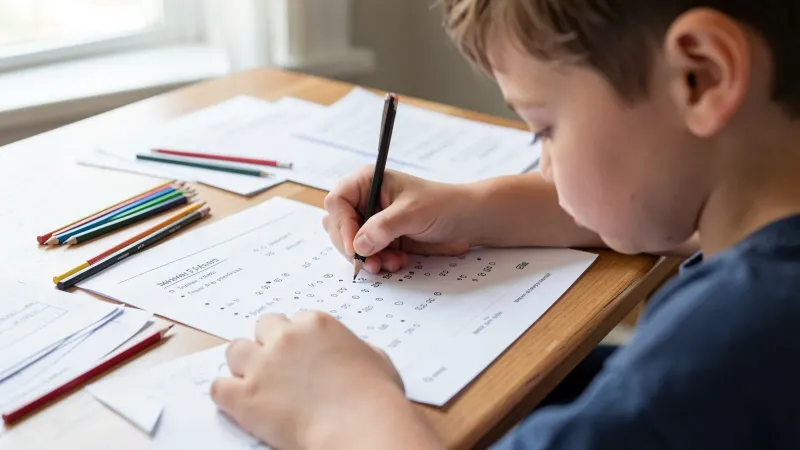
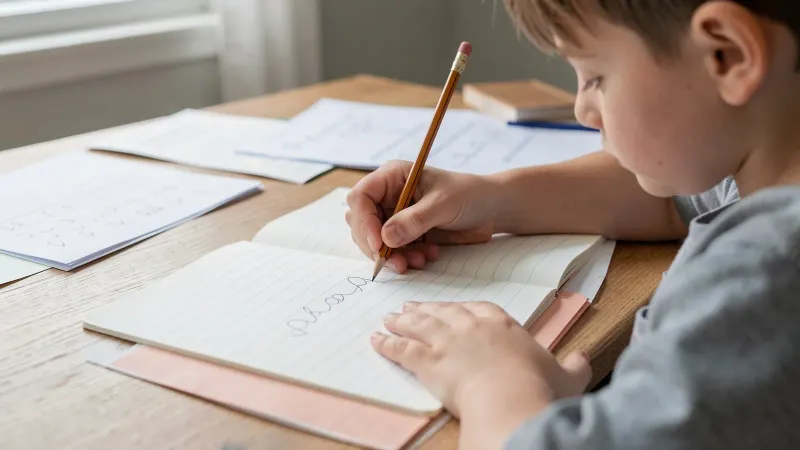
Write the name once, large, with a dark marker, on a strip of paper. Put a starting dot on each letter if that helps. Leave a blank strip underneath. Photocopy or photograph and print a few copies. That is a worksheet.
If you want a dotted model, write the name in pale highlighter and have the child go over it, or use a light grey print of your own handwriting, not a random font that makes a and g look like strangers. Use the capitalization the school uses. Many classrooms teach a capital first letter and lowercase for the rest; a page in all capitals can be a confusing extra.
If the name is long, practice it in parts for a while: the first letter, or the first few letters, then the rest on another day. A child who has a long name should not have to work twice as long as a child named Sam in order to be “done.”
| Situation | What to put on the page | How to run the sitting | A trap to avoid |
|---|---|---|---|
| The child is only just interested | One large model, one try underneath, maybe a place to draw their face | You write, they try, you stop, you put it on the fridge if they want | Five rows of tracing “to get their money’s worth” on a free file |
| The name is long or has an unusual letter | The name in two parts, or a first-name only page | Celebrate a good first letter; add the rest later | Forcing the whole official name, including a middle name, in one line |
| School has started a particular style | A model in that style, only | Ask the teacher for a sample if you are unsure | Downloading a decorative font because it looked “preschool” |
| There is a younger sibling at the table | A second, simpler scribble page for the sibling | Each child has their own sheet and crayon | Sharing one worksheet and one pencil |
| You found a download you like | Only if you may print it, and only after you check the letter shapes | Print one copy first and try it | A forty-page “pack” printed on a Sunday night |
You do not need a special program to do this. Lined paper can help later; a wide unlined strip is often enough at the beginning.
A short, kind sitting
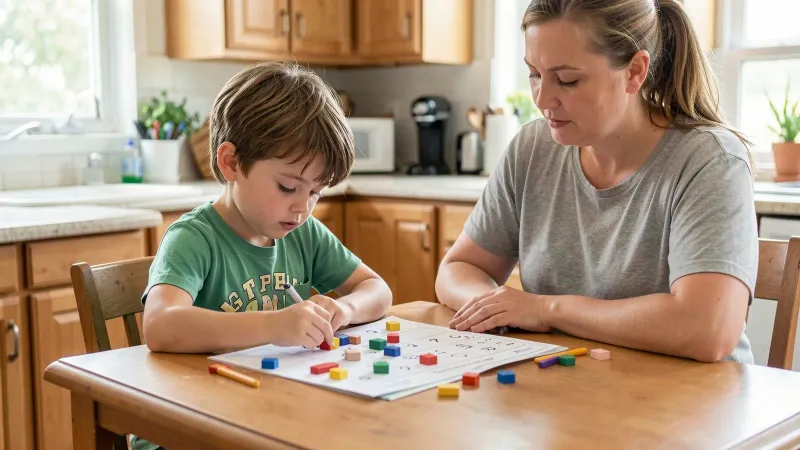
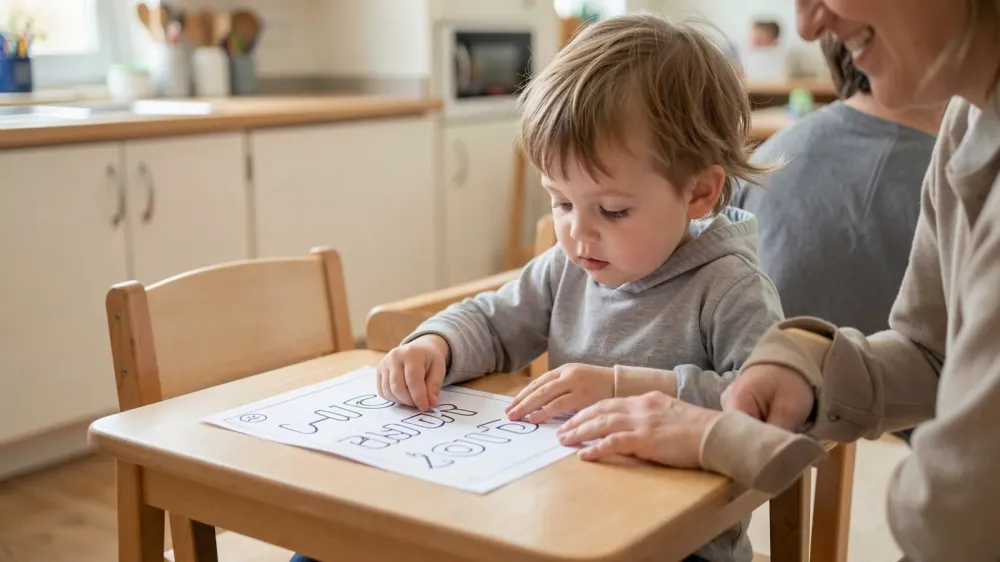
Sit so the child can see the model and rest their feet. Offer a crayon or a short pencil. Point to the first letter. If they want to go over your highlighter, fine. If they want to write their own version underneath, also fine, even if only the first letter is recognizable. Say the name as they work, so the letters stay connected to a word they love.
Stop after a few tries. A name written once with attention is a complete activity. If they want to decorate the page, let them. If they want to stop, let them. Put the date on the back if you are keeping a folder; children like to see that last month’s first letter was harder, but only if looking back feels like pride and not a comparison.
Do not hold and push the child’s hand through every letter as a daily habit. A brief guide can help. The child still has to make the movement. If they refuse name practice altogether, leave it for now and write their name, in front of them, on paintings and bags, which is also teaching.
Keep small crayons and caps away from children who still mouth objects, and sit with the work the same way you would for any close table activity.
Finding free pages without wandering into a copyright mess
“Free” should mean the maker has offered the page for your use, or that you made it. It does not mean a search result that happens to open. If a site is clearly sharing someone else’s worksheets, close it and go back to your marker.
Some libraries, schools, and public agencies share simple practice ideas. A teacher may also send a sample of the child’s name in the school’s style; that one sheet, copied with permission, is more valuable than a stack from the internet.
If you do use a downloadable page, print a single copy, try it, and only then print a few more. Adjust the size so the name is large. Crop the decorations if they crowd the letters.
A checklist before you print or draw the name
- The model uses the capitalization and letter style the child will actually need
- The name is large, dark, and has space underneath
- A long name can be practiced in parts
- The sitting will be short and optional enough to remain friendly
- You made the page, or you have permission to print it
- A younger sibling has something else to do
- You will not turn a first name into a nightly test
Questions preschool families ask about names
My child can recognize their name but will not trace it. Is that a problem?
No. Recognition usually comes first, and it is already useful. Keep writing the name for them where it matters, and offer tracing when they are interested. Forcing a tracing session can wait.
Should the page be in all capitals?
Only if that is what the school, or your own consistent home style, is using. Many preschool rooms use a capital first letter and lowercase after that, because that is how the name will appear in books. Pick one and stay with it for a while.
What about last names?
A last name is a second project. Get the first name comfortable before you add it, unless the child is keen and the school needs both on a label. Two short pages are kinder than one cramped official signature.
Are rainbow-writing and other tricks useful?
They can be, once in a while: writing the name in a second color, or building it with play dough, or finding the letters on a sign. They should not become a requirement around every worksheet. The ordinary, large, clear name, tried a few times, is the core of the work.