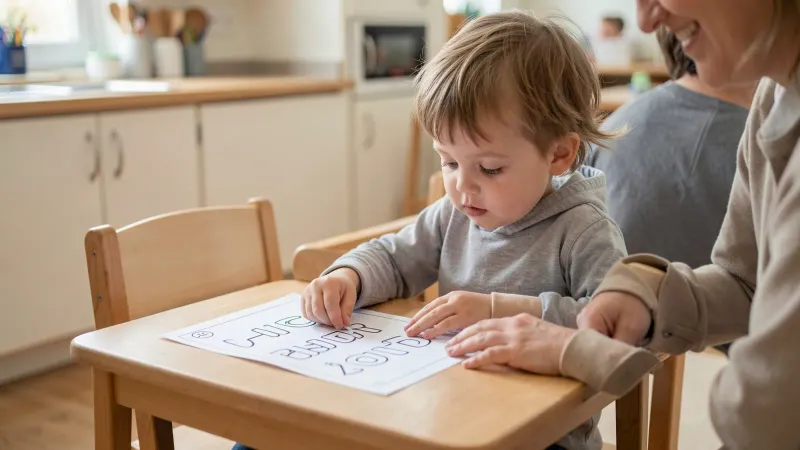
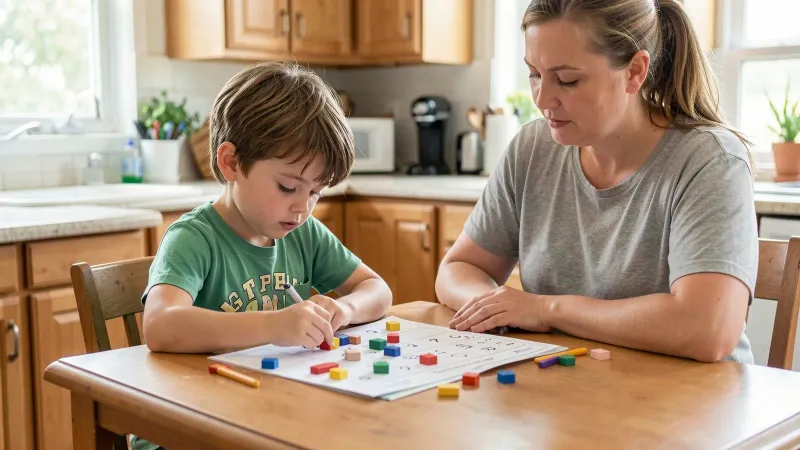
printablesdot to dotpreschoolfine motor
Dot to Dot Activities Printable: Everything You Need to Know
A practical guide to printable dot-to-dot activities, with an age-and-difficulty table, printing tips, and safety notes drawn from CDC milestone guidance.
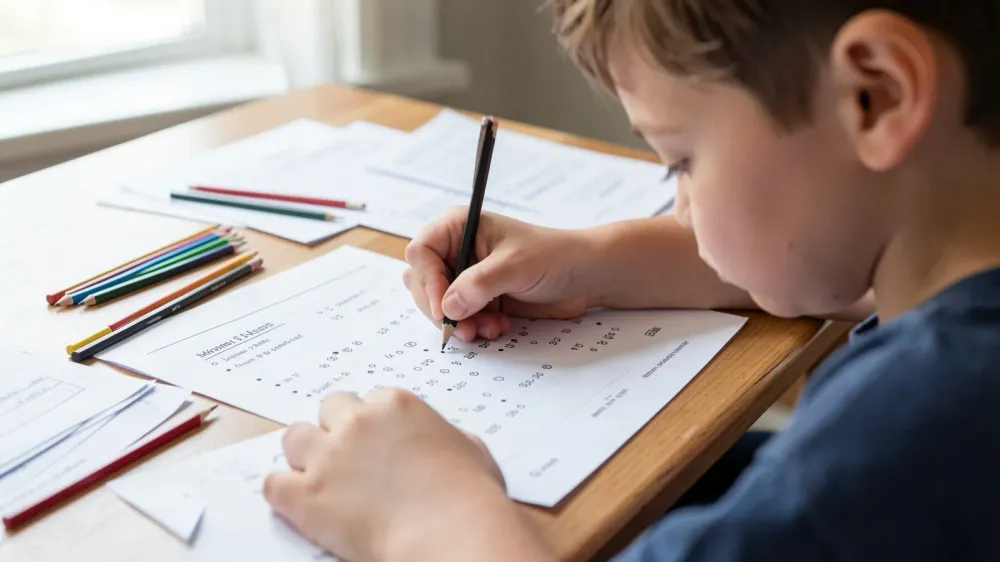
Start with a short sitting and a page that is not too busy
Printable dot-to-dot activities look simple from across the room, and they are, when the page matches the child. They are less simple when a four-year-old is handed a fifty-dot puzzle meant for a patient eight-year-old, or when the printer has shrunk the numbers into a grey fog. This is a practical guide to choosing, printing, and sitting through a page without turning it into a test.
Think of a dot-to-dot as a short path: find the next number or letter, draw a line, and, at the end, see a picture appear. That is already enough. You do not need to announce a list of skills. If you want a developmental backdrop, the CDC’s milestone pages are the official place to remember that children the same age can have very different pencil control and attention. Use them as context, not as a score sheet for a puzzle.
Keep the session short, sit nearby, and stop while it is still going well. A finished half-picture that the child is proud of is a better end than a complete page and a fight.
How to match the page to the child
The main variables are how many dots, how large the numbers are, whether the path crosses itself, and whether the child is still learning to count or to recognize letters. A preschooler who can count to ten with help may enjoy a large, widely spaced 1–10 picture. A child who is already comfortable writing numbers may want a slightly longer path, not a jump to a tiny 1–100 page.
| Child and sitting | A page that usually fits | How to set it up | A sign it is too hard, or too easy |
|---|---|---|---|
| A younger preschooler, short attention, still mouthing odd objects | Very few dots, large numbers, a thick line path, a familiar subject | Use a chunky pencil or crayon; sit together; put the pencil away after | The child cannot find “2,” or starts scribbling because the hunt is no fun |
| An older preschooler who counts with more confidence | A slightly longer path, still with large numerals and plenty of space | Number a few dots together first, then let them try | The lines constantly cross and the child loses the thread |
| An early school-age child | More dots, or a letter-to-letter path, still clearly printed | A sharp pencil, a clipboard, and permission to skip and come back | The print is so small they guess, or they finish in a blink and look bored |
| A mixed-age table | One easy page and one harder page, not one shared sheet | Each child has their own pencil and page | The younger one is “helping” by grabbing, or the older one is scoring the younger one |
| A tired afternoon | A page they have already done, or a very short new one | Tea, a snack first, then five minutes | You had planned a “learning packed” hour and everyone is already done in the wrong way |
If you cannot find a page that fits, make one. Draw a large simple shape, put ten numbered dots on it, and photocopy or print that. A homemade path that works is more useful than a pretty download that does not.
Printing, pencils, and a table that can take a scribble
Print at actual size, not “fit to page,” if shrinking would make the numbers hard to read. Black on white is easier than a pale grey watermark behind the dots. If your printer is faint, go over the numbers once with a marker before the child starts, or reprint.
A clipboard or a book under the page helps on a soft tablecloth. Put a short pencil in a fresh grip if the child is still developing one, and do not turn the sitting into a lecture about fingers. If you have a concern about grip, strength, or avoidance that does not ease, that is a question for the child’s health care provider or for a professional they recommend, not for a printable.
Keep small objects off the table. Pencils have erasers and caps; younger preschoolers may still put things in their mouths. The same official common sense you would use for any close table work applies here: sit with the child, and put tools away when you are done.
Let them color the picture after the lines are in, if they want to. That is not a lesser version of the activity. It is often the part they came for. If they want to stop at the lines, that is also finished.
Do not use a printable you do not have the right to reproduce. Many pages are sold with a licence for a family or a classroom, and “printable” is not the same as “free to post or to photocopy without limit.” Make your own, use what the creator has clearly offered for that use, or borrow a book and work on a copy only if the publisher allows it.
A simple way to run the sitting
- Choose one page, already printed, and clear a space.
- Point to the first dot together. If the child wants to take over, let them.
- If they lose the number, find it with them. Do not hover with the answer over every dot.
- When the picture appears, name it if they want, and offer color if they want.
- Put the page somewhere it can be seen, or in a folder, and stop.
If a child is frustrated, reduce the dots next time, or draw the path in a light highlighter first so they can trace. Tracing a faint path is still useful work. It is not cheating.
A checklist before you hit print
- The number of dots and the size of the numerals match this child
- The print is dark and large enough to read
- The sitting can be short, and can end early
- Each child has their own page if you are working side by side
- You have the right to print the page you are using, or you made it yourself
- Pencils and small parts are supervised with younger children
- You will not use the page as a test of whether the child is “ahead”
Questions parents ask after the first smudged page
At what age should a child be able to do a dot-to-dot?
There is no official birthday for this. It depends on counting or letter knowledge, pencil control, and patience. Start with very few, very large dots, and move up only if the child is still enjoying it. The CDC milestone pages can tell you what a wide range of typical development looks like; they will not grade a puzzle.
Are numbered pages better than letter pages?
Use what the child is currently practicing. Numbers are the usual start. Letter paths can be a good change when letter recognition is already underway. A mixed page is confusing if either set is still new.
What if my child skips dots or draws their own picture?
If they skipped because they lost the path, help them find the next number. If they abandoned the path because they wanted to draw the dog themselves, let the drawing stand and try a simpler path another day. The point is a short, successful sitting, not a perfect line.
Can I use these as handwriting practice?
They can support pencil control, but they are not a handwriting program. If handwriting is the goal, use a short, well-designed letter session as well, and keep both of them kind and brief. One packed afternoon of “practice” is usually too much.